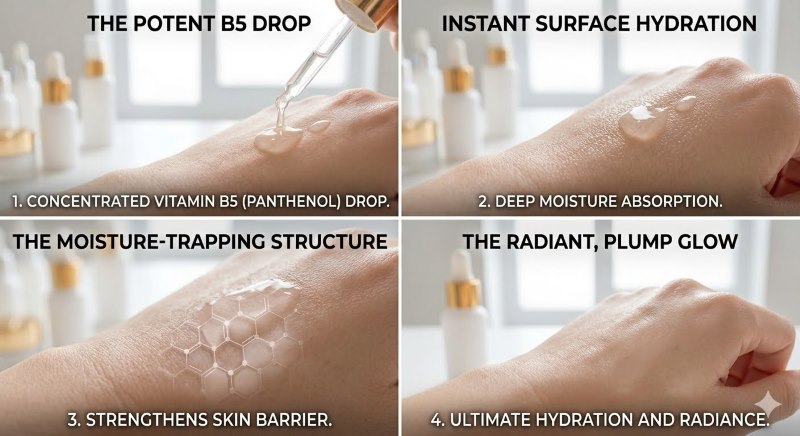
In the ever-evolving world of dermatological science and skincare trends, ingredients come and go. Yet, a few select compounds remain timeless due to their undeniable, scientifically proven efficacy. Among these elite ingredients is Vitamin B5, often listed on product labels as Panthenol, Dexpanthnol, or Pantothenic Acid. Renowned globally as the ultimate hydration hero, Vitamin B5 has earned its reputation by doing far more than just sitting on top of the skin; it fundamentally transforms the skin barrier from within.
Whether you are battling chronic dryness, struggling with a compromised skin barrier from over-exfoliation, or searching for a soothing agent to calm acne-prone skin, Vitamin B5 is the versatile powerhouse your routine needs. In this comprehensive, ultimate guide, we will dive deep into the chemical science behind Vitamin B5, explore its multi-faceted benefits for radiant skin, and provide actionable tips on how to integrate it into your daily WordPress-optimized skincare regime.
The Molecular Science of Vitamin B5: Panthenol vs. Pantothenic Acid
To fully appreciate why Vitamin B5 is so effective, it helps to understand its chemical structure and how it interacts with human biology. In its raw form, Vitamin B5 is known as Pantothenic Acid, a water-soluble vitamin essential for all living cells. However, in topical skincare formulations, you will most frequently encounter its stable alcohol analogue, Panthenol (specifically D-panthenol).
When you apply D-panthenol to your face, a fascinating biological conversion takes place. The skin readily absorbs Panthenol and converts it directly into Pantothenic Acid via enzymatic oxidation. This acid is a vital precursor to Coenzyme A (CoA), a crucial molecule responsible for cellular metabolism, energy production, and the synthesis of fatty acids and sphingolipids. These lipids are the essential “mortar” that holds your skin’s “bricks” (cellular structure) together, creating a tight, impermeable shield against external environmental aggressors.
The Two Structural Forms of Panthenol in Skincare
- D-Panthenol (Dexpanthenol): The biologically active form that your body can actively convert. This is the variant responsible for clinical healing, skin soothing, and deep moisturization.
- L-Panthenol: The biologically inactive mirror image. While it still offers basic surface moisturizing properties, it lacks the potent regenerative and wound-healing power of D-panthenol. High-quality skincare brands always prioritize D-panthenol.
Why Vitamin B5 is the Ultimate Hydration Hero
Many people confuse simple moisturization with true cellular hydration. While heavy oils coat the skin to prevent water loss, they do not add water to the skin. This is where Vitamin B5 excels as a dual-action marvel: it functions simultaneously as a humectant and an emollient.
1. Molecular Water Magnet (Humectant Action)
As a humectant, Vitamin B5 possesses a high affinity for water molecules. It penetrates deep into the lower layers of the stratum corneum (the outermost layer of the skin), grabbing moisture from the air and from the deeper layers of your body, anchoring it securely within the skin cells. This immediate influx of water plumps up the skin, instantly softening the appearance of fine lines and wrinkles caused by dehydration.
2. Preventing Transepidermal Water Loss (TEWL)
Hydrating the skin is useless if that moisture evaporates immediately into thin air. Vitamin B5 solves this by reinforcing the skin’s lipid barrier. By sealing the microscopic gaps between skin cells, it drastically reduces Transepidermal Water Loss (TEWL). It acts like an intelligent protective seal, ensuring that the hydration it pulls into your skin stays there for hours on end, maintaining a dewy complexion.
Beyond Hydration: The Multi-Faceted Benefits for Radiant Skin
While hydration is its primary claim to fame, Vitamin B5 is a highly versatile multi-tasker that addresses several skincare concerns simultaneously.
Accelerated Wound Healing and Tissue Repair
Because Vitamin B5 stimulates cellular proliferation (fibroblast activity) and boosts Coenzyme A production, it radically speeds up the skin’s natural healing process. Clinical studies show that topical Panthenol significantly accelerates the closure of micro-wounds, making it an exceptional post-procedure treatment (such as after chemical peels, microneedling, or laser therapies).
A Natural Anti-Inflammatory and Soothing Agent
If you suffer from redness, irritation, rosacea, or eczema, Vitamin B5 acts as a comforting blanket for your skin. It suppresses inflammatory markers, quickly reducing erythema (redness) and relieving the intense itching and discomfort associated with a compromised skin barrier.
The Secret Weapon for Acne-Prone Skin
Many acne treatments, like salicylic acid, benzoyl peroxide, or retinoids, can leave the skin dry, peeling, and irritated. Integrating Vitamin B5 into an acne routine provides crucial moisture without clogging pores (it is completely non-comedogenic). Furthermore, some research suggests that Pantothenic acid helps regulate sebum (oil) production, preventing the pore blockages that lead to breakouts in the first place.
How to Integrate Vitamin B5 Into Your Skincare Routine
One of the best attributes of Vitamin B5 is its extreme chemical stability and compatibility. It plays incredibly well with almost every other active ingredient on the market. Here is how to strategically introduce it to your routine:
- The Hydration Multiplier (With Hyaluronic Acid): Layer a Vitamin B5 serum with Hyaluronic Acid on damp skin. Hyaluronic acid floods the surface with moisture, while B5 drives it deeper and locks down the barrier.
- The Anti-Aging Shield (With Retinol): Retinol can cause purging, flaking, and irritation. Applying a Vitamin B5 cream right after your retinoid mitigates these side effects without neutralizing the anti-aging benefits of the Vitamin A.
- The Brightening Duo (With Vitamin C): Use a Vitamin B5 serum in the morning alongside your Vitamin C. The B5 will soothe any tingling caused by pure L-ascorbic acid while maintaining a glowing, plump canvas for makeup application.
Potential Side Effects: Is Vitamin B5 Safe for Everyone?
The short answer is yes. Vitamin B5 is widely regarded by dermatologists as one of the safest, most well-tolerated ingredients available. It is classified as non-irritating and possesses a near-zero rate of allergic reaction. It is perfectly safe for daily use, both morning and night, and is highly recommended for pregnant or breastfeeding individuals who need to avoid harsher chemical actives.
Conclusion: Achieve Your Radiant Glow Today
Achieving radiant, glowing skin does not require a complicated, 10-step routine filled with harsh acids. Often, the most effective approach is to return to the foundational basics of skin health: deep hydration and barrier repair. Vitamin B5 is the definitive, science-backed solution that delivers on both fronts. By incorporating this ultimate hydration hero into your daily regimen, you are investing in the long-term resilience, smoothness, and natural radiance of your skin.
FAQ Schema (Crucial for Rich Snippets)
- Question 1:
Can I use Vitamin B5 on my skin every day?- Answer: Yes. Vitamin B5 (Panthenol) is completely safe for daily use, both in your morning and evening skincare routines, across all skin types.
- Question 2:
Is Panthenol the same as Vitamin B5?- Answer: Yes. Panthenol is the alcohol derivative of Vitamin B5. Once absorbed by the skin, it converts directly into active Pantothenic Acid.
- Question 3:
Will Vitamin B5 clog my pores or cause acne?- Answer: No. Vitamin B5 is entirely non-comedogenic, meaning it will not clog pores. It actually helps soothe acne-induced inflammation.